


The 2–4 PM Slowdown
Nearly everyone recognizes it, the point in the afternoon where focus fades, motivation drops, and tasks take longer than they should.
Most assume the cause is:
- lunch choices
- lack of sleep
- too much caffeine earlier
While these can contribute, they’re often not the primary reason.
A more consistent factor behind daily fatigue is gradual dehydration throughout the day.
Why Energy Naturally Declines During the Day
Your body continuously uses fluid for:
- circulation
- temperature regulation
- cognitive activity
- muscle movement
Unlike hunger, thirst signals lag behind actual need. By the time you feel thirsty, performance has already begun to decline.
Even mild fluid loss can affect alertness and concentration.
The Brain’s Sensitivity to Hydration
The brain relies heavily on stable blood flow and electrolyte balance.
When hydration drops:
- reaction time slows
- concentration decreases
- mental fatigue increases
- motivation feels lower
This often appears as a “mental wall” rather than physical tiredness.
Why Sugar Gets Blamed
Sugar causes noticeable spikes and drops in energy, so it becomes the obvious explanation. But many people experience afternoon fatigue even with balanced meals.
In those cases, the body is not lacking fuel, it’s struggling to deliver it efficiently.
Fluid balance affects nutrient transport and oxygen delivery, both required for sustained energy.
Why Caffeine Sometimes Stops Working
As the day progresses, people often increase caffeine intake to compensate.
However, stimulants don’t replace fluid balance. When hydration is low, the body’s response to caffeine becomes less consistent, leading to diminishing returns.
This creates a cycle of temporary alertness followed by continued fatigue.
The Gradual Dehydration Effect
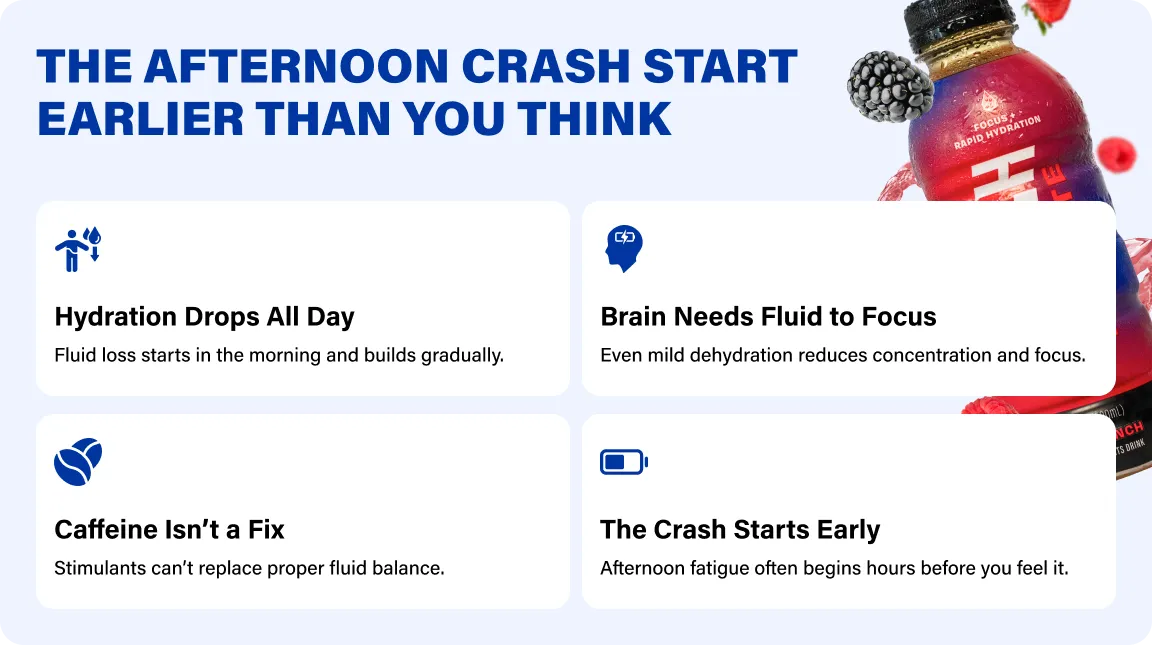
Morning routines often include beverages, but fluid intake frequently slows during the busiest part of the day.
By afternoon:
- cumulative fluid loss increases
- mental performance declines
- perceived energy drops
Because the change is gradual, it’s rarely noticed as dehydration.
Stabilizing Energy Instead of Spiking It
Rather than relying only on stimulation, maintaining steady hydration supports:
- consistent focus
- stable mood
- sustained productivity
Small adjustments earlier in the day often prevent the afternoon crash entirely.
Afternoon fatigue isn’t always caused by sugar or sleep. In many cases, it reflects the body running below optimal hydration levels after hours of continuous activity.
Understanding the role of fluid balance helps explain why energy dips happen and why consistent intake throughout the day leads to steadier performance.

Stay Hydrated. Stay Informed.
Join the Launch Hydrate community and stay ahead with the latest news, hydration tips, and exclusive product updates.
Sign up today and enjoy 10% off your first order!
.png)