

What Are Electrolytes and What Do They Actually Do?
Electrolytes are one of those health and performance terms people hear all the time, but many are not completely sure what they actually are.
They show up in sports drink ads, hydration packets, wellness conversations, recovery routines, and even everyday advice about drinking more water. But electrolytes are not just a marketing term. They play a real and important role in how the body functions.
So what are electrolytes, and what do they actually do?
Electrolytes are minerals that carry an electric charge when dissolved in fluid. In the body, they help regulate some of the most important functions required for movement, hydration, and overall performance.
Some of the main electrolytes include:
- Sodium
- Potassium
- Magnesium
- Calcium
- Chloride
These minerals work together to help the body maintain fluid balance, support muscle contractions, enable nerve signaling, and keep many internal systems working the way they should.
Why Electrolytes Matter
Electrolytes matter because hydration is about more than just water intake.
When the body loses fluids through sweat, heat, activity, or other forms of exertion, it also loses key minerals. If those minerals are not replenished when needed, the body can have a harder time maintaining balance.
This is why electrolytes are closely associated with hydration. They help the body hold and use fluids more effectively instead of treating hydration as a water-only issue.
In practical terms, electrolytes support:
- Fluid balance
- Muscle function
- Nerve communication
- Physical performance
- Recovery after sweat loss
- Day-to-day body regulation
That is a big reason they become especially important during exercise, long days outside, travel, heat exposure, and other situations where the body is losing more fluid than usual.
What Electrolytes Actually Do in the Body
Electrolytes are involved in several major functions, and each one helps explain why they matter so much.
They Help Regulate Fluid Balance
One of the main jobs of electrolytes is helping the body manage where fluids go and how they are retained. Water does not work in isolation. Electrolytes help guide fluid balance inside and outside cells, which is one reason hydration products often focus so heavily on minerals like sodium and potassium. Without the right balance of electrolytes, water intake alone may not always be the full answer, especially after heavy sweating or extended activity.
They Support Muscle Function
Muscles depend on electrolytes to contract and relax properly. That includes everything from intense training sessions to ordinary daily movement. When electrolyte balance is off, muscle performance can suffer. This is one reason people often connect electrolyte depletion with cramping, fatigue, or feeling physically off during or after exertion.
They Help Nerves Send Signals
The nervous system relies on electrically charged minerals to send signals throughout the body. Electrolytes help support this communication process, which affects everything from muscle activation to coordination and general body function.
They Support Recovery After Fluid Loss
After the body loses fluids through sweat or activity, replacing both water and electrolytes can be important. This is especially relevant for athletes, active individuals, people working in the heat, frequent travelers, and anyone whose lifestyle regularly increases hydration demands. Replenishing electrolytes can help support a more complete recovery process than water alone in certain situations.
The Main Electrolytes People Hear About Most
Although several minerals function as electrolytes, a few tend to come up most often in hydration conversations.
Sodium
Sodium is one of the most important electrolytes for fluid balance. It plays a major role in helping the body retain and use water appropriately, especially when fluid is lost through sweat. This is one reason sodium is often a core ingredient in hydration products designed for exercise, heat, and recovery support.
Potassium
Potassium works alongside sodium to support fluid balance, muscle function, and nerve signaling. It helps maintain internal balance and is another key part of hydration support.
Magnesium
Magnesium is involved in muscle function, nerve support, and many internal processes tied to performance and recovery. While it is discussed in many wellness contexts, it also plays a meaningful role in the broader electrolyte picture.
Do You Always Need Electrolytes?
Not every situation requires a dedicated hydration product.
For many people, normal food and water intake may cover typical daily needs under normal conditions. But there are times when electrolytes become more relevant.
That may include:
- Exercise and training
- Heavy sweating
- Hot weather
- Travel
- Long outdoor days
- Recovery after exertion
- Times when plain water does not feel like enough
The point is not that everyone constantly needs extra electrolytes. The point is that hydration demands change depending on what the body is doing. That is where electrolyte support can become more useful.
Electrolytes vs. Plain Water
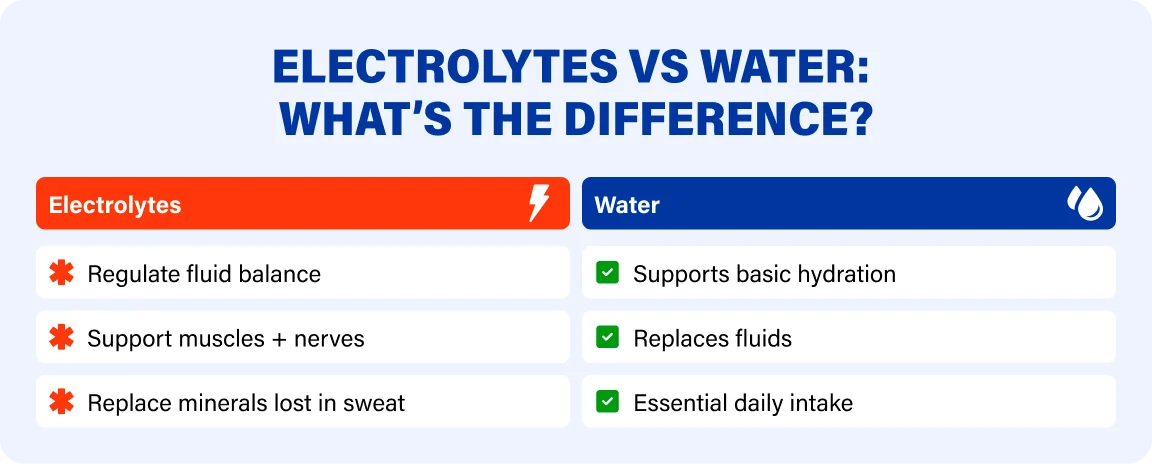
Plain water is essential, but electrolytes and water are not interchangeable.
Water helps with hydration broadly, while electrolytes help the body regulate and use that hydration effectively. In many everyday situations, water may be enough. In other situations, especially those involving sweat loss or higher physical demand, electrolyte support may provide a better match for what the body is losing.
That is why many people reach for hydration drinks or electrolyte products during workouts, hot days, recovery periods, and physically demanding routines.
Why This Matters for Active Lifestyles
For active people, hydration is not only about drinking more. It is about replenishing intelligently.
Whether someone is training, working outside, recovering after exercise, or trying to stay sharp during long days, electrolyte balance can affect how they feel and perform. Energy, endurance, recovery, and general hydration support all connect back to how well the body manages fluids and essential minerals.
This is one reason electrolyte-focused hydration continues to gain attention. People are becoming more aware that hydration is not always as simple as just drinking plain water and hoping for the best.
Final Thoughts
Electrolytes are minerals that carry an electric charge and help the body manage some of its most important functions.
They support fluid balance, muscle contractions, nerve signaling, and hydration recovery, which is why they matter during exercise, heat, sweating, travel, and other demanding situations. While water remains essential, electrolytes help explain why hydration is often about more than water alone.
Understanding what electrolytes do makes it easier to understand why better hydration can support how you feel, move, and recover.

Stay Hydrated. Stay Informed.
Join the Launch Hydrate community and stay ahead with the latest news, hydration tips, and exclusive product updates.
Sign up today and enjoy 10% off your first order!
.png)