


Thirst Isn’t Always a Water Problem
Most people assume thirst simply means they need to drink more water.
But persistent thirst, especially when you’re already drinking fluids, can signal that hydration balance, not volume, is the issue.
Understanding how thirst works helps explain why some people never feel fully hydrated.
How Thirst Signals Work
Thirst is regulated by changes in blood concentration and fluid balance.
When fluid levels drop:
- blood becomes more concentrated
- the brain triggers thirst
- the body seeks restoration
However, thirst often lags behind actual hydration need.
By the time you feel thirsty, mild dehydration may already be present.
Common Causes of Constant Thirst
1. Inconsistent Fluid Intake
Drinking large amounts at once instead of steady intake can lead to short-term relief but long-term imbalance.
2. Electrolyte Imbalance
Hydration depends on sodium and potassium balance.
If electrolytes are low, the body may struggle to retain fluid effectively.
This can create a cycle of drinking without lasting hydration.
3. High Caffeine Consumption
Caffeine can increase fluid turnover, especially if intake exceeds moderate levels.
This doesn’t eliminate hydration, but it may alter balance.
4. Environmental Conditions
Air-conditioned or heated environments increase unnoticed fluid loss through respiration and skin.
Many office workers experience this daily.
5. Increased Physical Demand
Exercise, stress, and extended concentration all increase fluid usage.
Mental effort also affects hydration needs.
Why Drinking More Water Doesn’t Always Fix It
If thirst persists despite frequent water intake, the issue may be distribution rather than supply.
When fluid lacks balance support, the body may:
- eliminate it quickly
- fail to distribute it efficiently
- continue signaling thirst
Hydration depends on absorption and retention.
Signs of Inefficient Hydration
Persistent thirst may be accompanied by:
- dry mouth
- afternoon fatigue
- headaches
- frequent urination
- difficulty concentrating
These symptoms often reflect mild dehydration cycles rather than severe deficiency.
Improving Hydration Stability
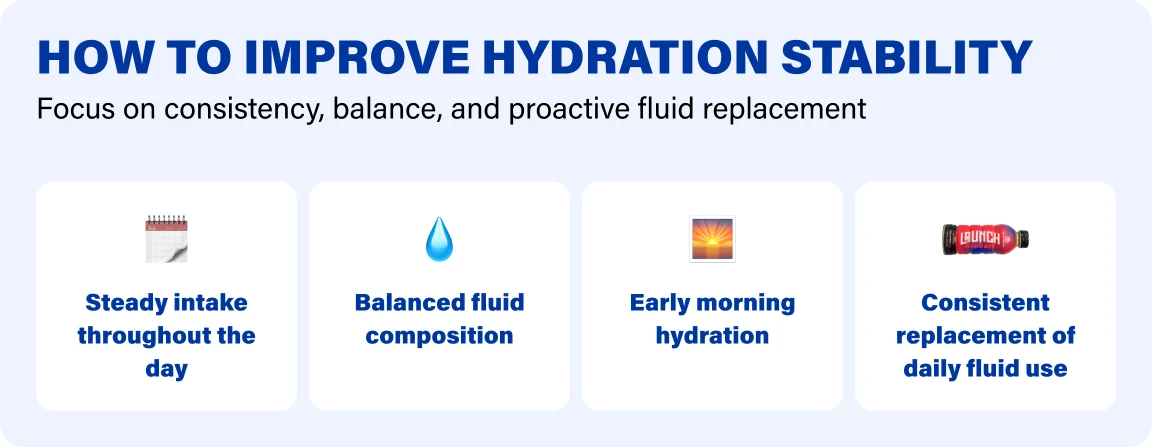
Instead of focusing only on volume, consider:
- steady intake throughout the day
- balanced fluid composition
- early morning hydration
- consistent replacement of daily fluid use
Small adjustments often reduce persistent thirst quickly.
Constant thirst isn’t always about drinking more water, it’s about maintaining balance. Hydration depends on how the body absorbs and retains fluid, not just how much is consumed.
Understanding this helps stabilize energy, focus, and overall daily performance.

Stay Hydrated. Stay Informed.
Join the Launch Hydrate community and stay ahead with the latest news, hydration tips, and exclusive product updates.
Sign up today and enjoy 10% off your first order!
.png)